How to choose the right grid-tied inverter for your solar system
3 min readDJSolar Admin
Key criteria when choosing a grid-tied inverter: number of phases, capacity, number of MPPTs, monitoring and warranty policy.
3 min readDJSolar Admin
Key criteria when choosing a grid-tied inverter: number of phases, capacity, number of MPPTs, monitoring and warranty policy.
The inverter converts the direct current from the PV modules into alternating current for appliances and for feeding into the grid. A wrong choice can leave the system underperforming or lead to upgrade costs. This article summarizes the main criteria for choosing a grid-tied inverter.
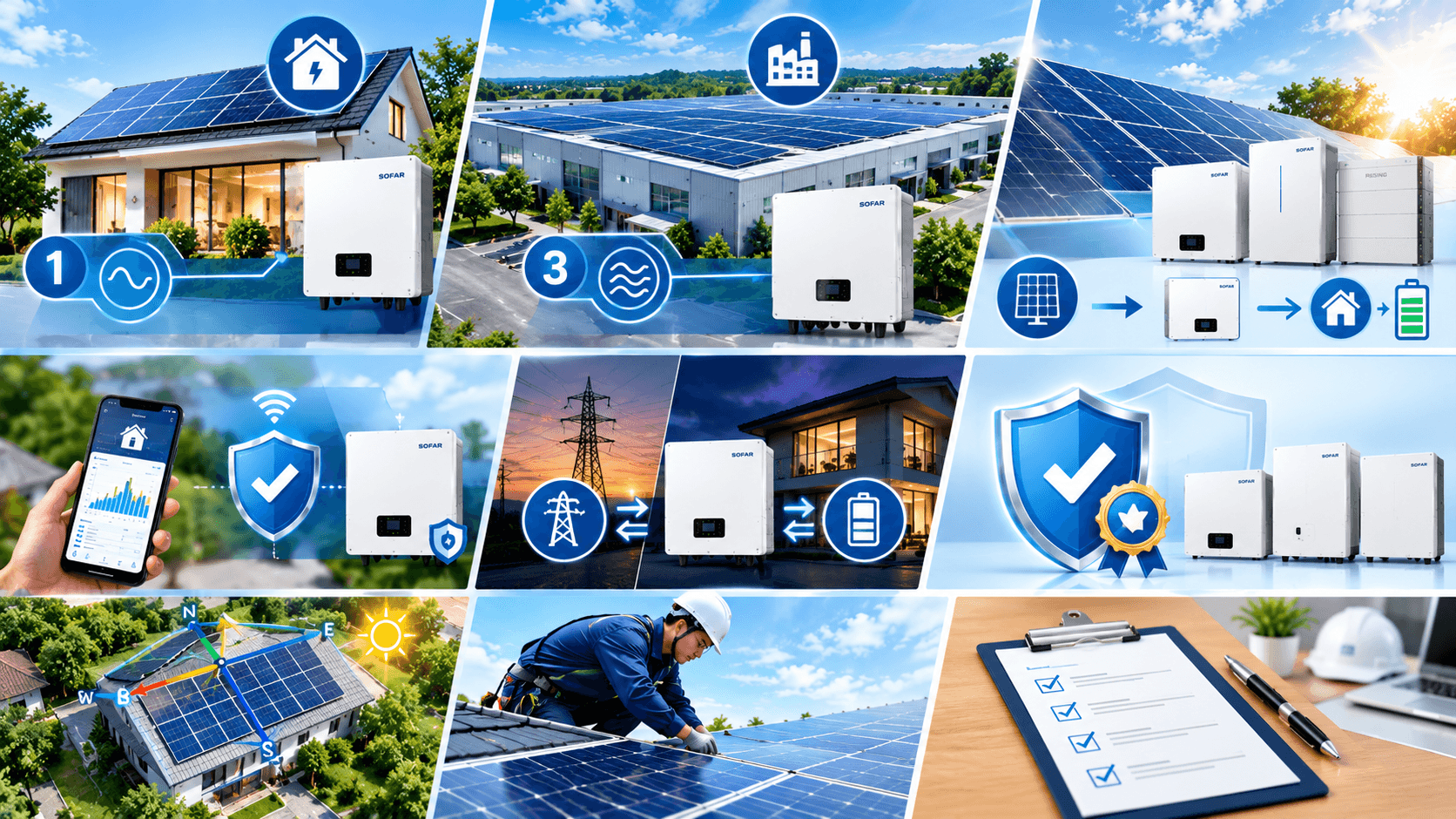
This is the first requirement and it cannot be changed. Homes and small shops usually use single-phase power, while factories, farms and commercial buildings usually use three-phase power. The inverter must have the same number of phases as the connection point of the building.
The installed PV capacity (kWp) is usually chosen slightly higher than the inverter's rated power to make better use of periods when the sun is not at its peak. The exact ratio depends on roof orientation, tilt, climate and the specifications of each inverter model, so it should be calculated by an engineer after a site survey rather than applying a fixed number.
Roofs with several orientations need an inverter with multiple MPPTs so that each group of PV modules operates at its own optimal power point. When the roof faces only one direction, fewer MPPTs are still sufficient and save cost.
A grid-tied inverter is suitable when the main goal is to cut daytime electricity bills. If you want backup during outages or to use stored energy in the evening, consider a hybrid inverter combined with a lithium energy storage battery. This is a decision about how you intend to use the system, not just a difference in investment cost.
An inverter with monitoring connectivity lets the system owner track generation and spot anomalies early. Some models also support a zero export function, which is useful when a project needs to limit feed-in to the grid. Check the specifications of each model on the product page before finalizing the configuration.
DJ SOLAR's grid-tied and hybrid inverters come with a 5-year or 10-year warranty depending on the model, and defective products are replaced 1-for-1 under the warranty terms. Ask clearly about the applicable conditions and the handling process before you buy.
If you need detailed advice, contact DJ SOLAR and our technical team will help you choose the right SOFAR inverter for your project.
Tin ngành
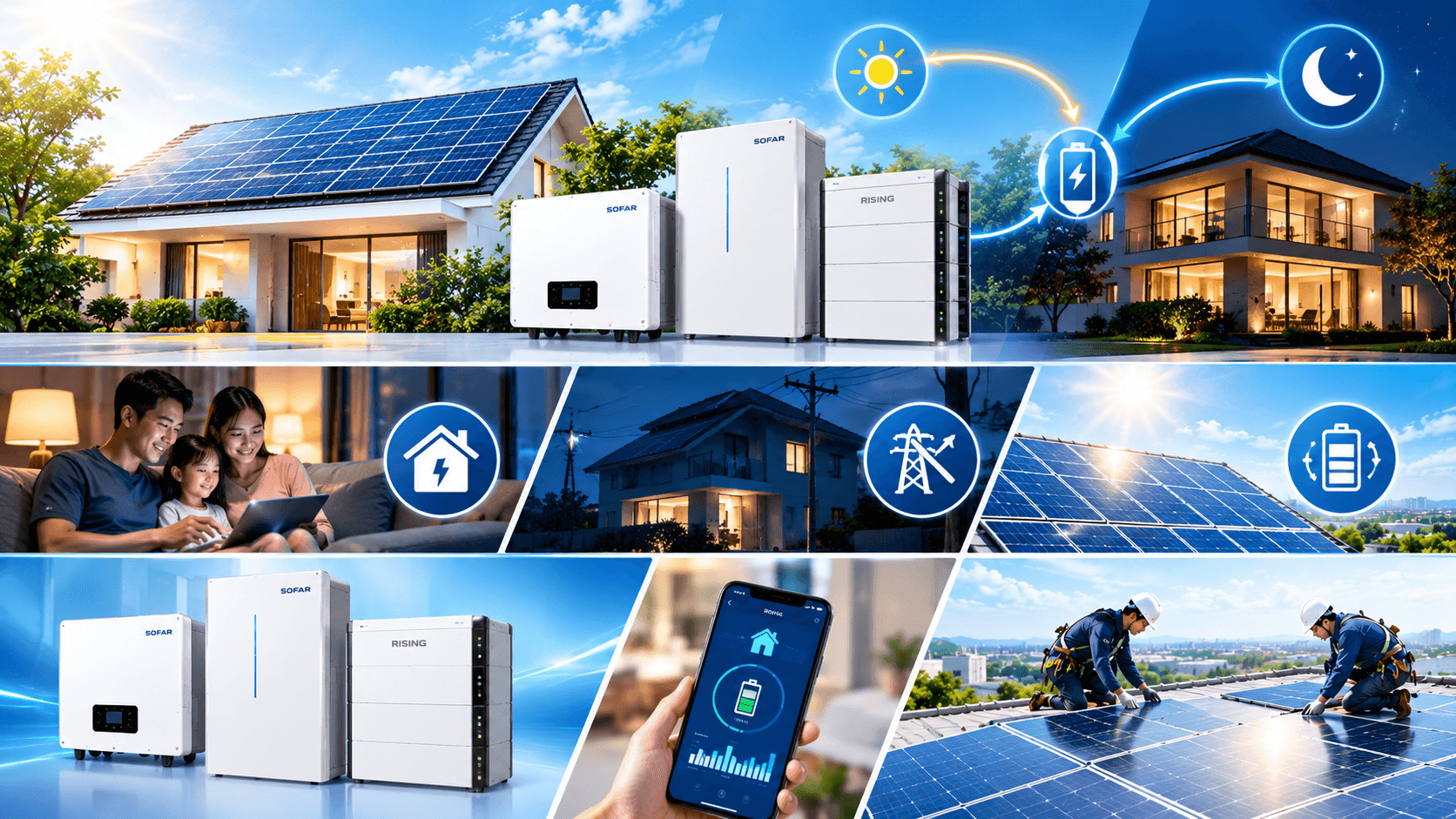
Lithium energy storage batteries are becoming increasingly common in solar systems. Here is why, and how to choose a suitable configuration.
Tin ngành
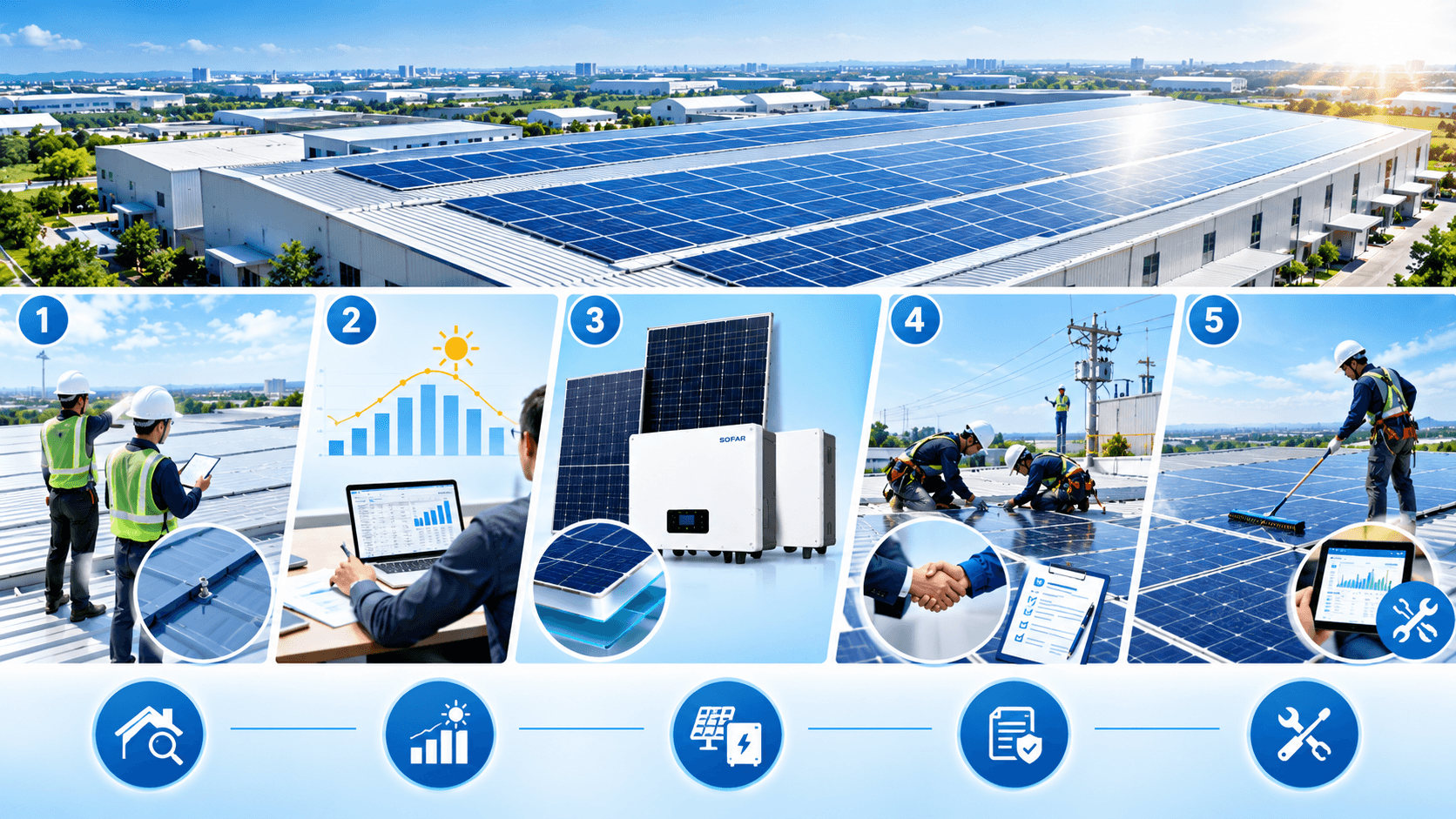
Checking the roof structure, sizing the system, choosing a three-phase inverter and reviewing the warranty are the steps to take before installing rooftop solar for a factory.

Tin ngành
Learn about N-type TOPCon technology and the dual-glass structure of TRINA PV modules, plus what to consider when choosing.
The DJ SOLAR team is ready to help you choose equipment and get a quote for your project.
